An input is a device that BodyWalkVR reads: the headset, a phone on your chest, trackers on your legs, a treadmill. What you wear decides what you can do - lean to walk, walk in place, jump, crouch, turn your body - and how you connect it. This page lists every device, what it can drive, how to connect it and where to wear it.
Each column is a tab of the app; each tab picks its own source, so one device can feed several tabs and different tabs can use different devices. A dash means the tab does not offer that device.
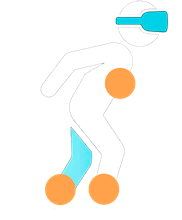
Quick Setup offers ten ways to walk. Each needs certain devices; the drawings are the app's own, the orange parts are what you wear.
The headset you already wear. It needs nothing extra and is the way to start if you have no other device.
Your VR controllers. They do not measure walking, but the stick can aim it, and their buttons and hands drive Mapping.
Anything SteamVR tracks in space: Vive trackers, Tundra trackers, and others SteamVR shows. They know their height, so one tracker can do everything - lean, steps, jump, crouch, turn.
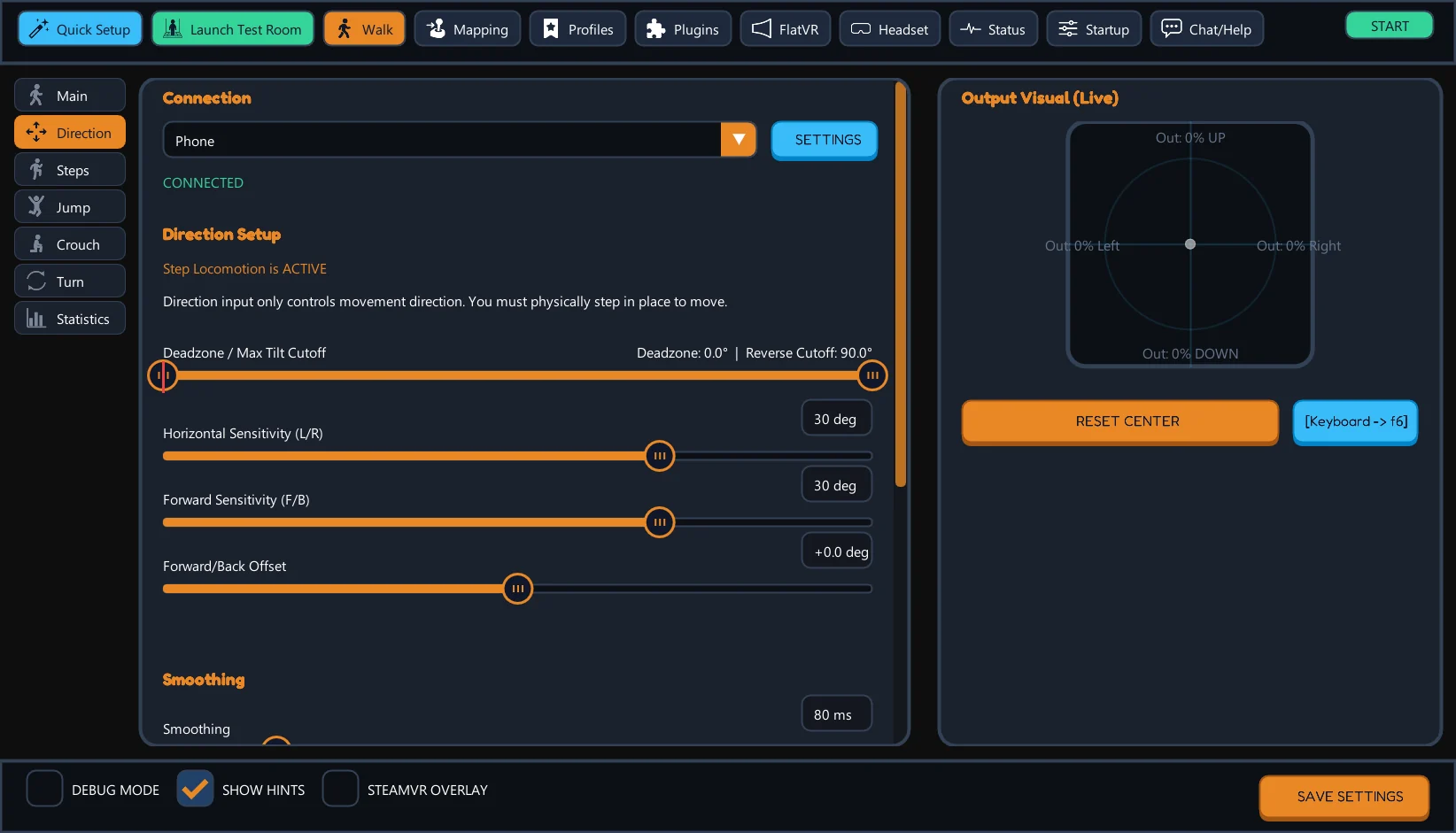
A phone strapped to your chest gives the lean, and phones on your legs can count steps. Any phone with a gyroscope works. The phone sends its sensors to the PC over Wi-Fi.
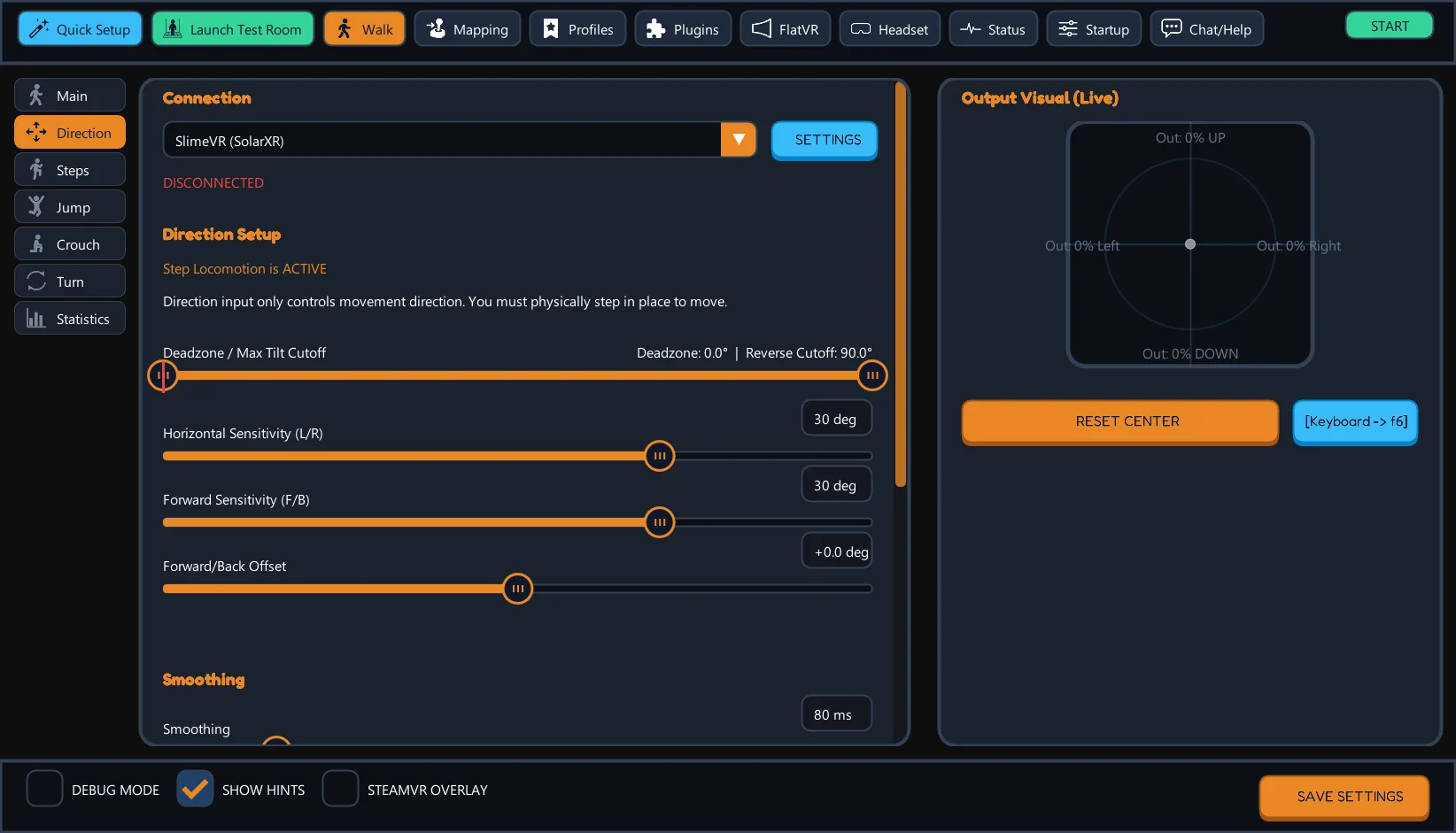
SlimeVR trackers read through SlimeVR Server, which stays running. The easy choice if you use the Server anyway for its calibration and body proportions.
The same SlimeVR trackers, read straight by BodyWalkVR with no Server running (BodyWalkVR 1.84+). You need SlimeVR Server only once, to join the trackers to your Wi-Fi.
Trackers that talk to a small USB receiver plugged into the PC. No Server, no Wi-Fi.
Nintendo Switch Joy-Con strapped to your legs count steps; their buttons can go to Mapping.
A treadmill that reports its belt as a mouse - the Marathon VR treadmill, or a home build with an optical sensor on the belt. Built in, no plugin, no driver.
Tuning and the rest of the body on a treadmill: Treadmills.
Any manual treadmill with a magnet on its roller and a reed switch or Hall sensor beside it, read by an Arduino. Each turn of the roller is a pulse; the pulses become speed.
Building one and tuning it: Treadmills.
Then pick how the movement reaches the game on Outputs. Whether a device is really sending shows on the Status map: its block in the INPUTS column lights up while data arrives.